Uncategorised
Turbo Actuator Symptoms: How to Tell If Your Turbo Actuator Is Failing
Turbo Actuator Symptoms: How to Tell If Your Turbo Actuator Is Failing
A failing turbo actuator can cause poor acceleration, limp mode, low boost, overboost, warning lights, unusual turbo behaviour and reduced fuel economy. In many cases the turbocharger itself is not the first part to blame. The problem may come from the actuator, the vane mechanism, the wastegate control, vacuum supply, wiring, position sensor or carbon build-up inside the turbo system.
If your car feels underpowered, suddenly loses boost or shows a turbo-related fault code, checking the actuator is one of the most important diagnostic steps. At Atom Car Parts turbo actuator range, you can find replacement actuators for many popular diesel and petrol vehicles, including Audi, BMW, Ford, Mercedes-Benz, Volkswagen, Toyota, Jaguar, Land Rover and other models.
Quick answer: what are the most common turbo actuator symptoms?
The most common symptoms of a bad turbo actuator are loss of power, delayed boost, limp mode, engine warning light, poor acceleration, overboost or underboost fault codes, unusual turbo noises, increased fuel consumption and inconsistent power delivery. In cars with electronic actuators, the ECU may also detect incorrect actuator position or communication faults.
A faulty actuator can make the car feel as if the turbo is not working properly, even when the turbocharger wheel, housing and cartridge are still in usable condition. That is why a proper diagnosis matters before replacing the entire turbocharger.


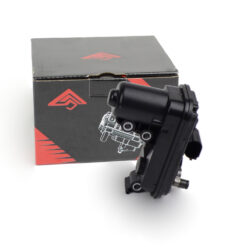
Land Rover/Range Rover
Turbocharger Actuator Land Rover – Range Rover III 2.9 TD. 177 BHP Turbo 712541.


What does a turbo actuator do?
A turbo actuator controls how the turbocharger manages exhaust gas flow and boost pressure. Depending on the turbo design, the actuator may control a wastegate or the variable vane mechanism inside a VNT or VGT turbocharger.
In simple terms, the actuator tells the turbo how much boost to produce. If it cannot move correctly, the turbo may produce too little boost, too much boost, or boost at the wrong time. This can affect drivability, fuel economy, emissions and engine protection systems.
There are several common actuator types:
- Vacuum turbo actuators – operated by vacuum pressure through hoses and a control solenoid.
- Electronic turbo actuators – controlled directly by the ECU and often fitted with a position sensor.
- Wastegate actuators – used to open or close the wastegate on fixed-geometry turbochargers.
- VNT/VGT actuators – used to move variable vanes inside variable geometry turbochargers.
1. Loss of power or poor acceleration
One of the first signs of a failing turbo actuator is a noticeable loss of power. The car may still start and idle normally, but it feels weak when accelerating, especially uphill, under load or when overtaking.
This happens because the actuator is not positioning the turbo correctly. If the vanes or wastegate do not move as expected, the engine may not receive the correct boost pressure. The result is a car that feels flat, slow and reluctant to accelerate.
Drivers often describe this as:
- the turbo “not kicking in”,
- slow response at low RPM,
- poor pulling power,
- weak acceleration on motorways,
- engine feeling restricted or held back.
If the issue is actuator-related, replacing only the complete turbo may be unnecessary. In many cases, the right replacement turbocharger actuator can restore correct boost control.
2. Limp mode after acceleration
Limp mode is one of the strongest signs that the ECU has detected a turbo control problem. When boost pressure is too high, too low or outside the expected range, the engine control unit may reduce power to protect the engine.
This can happen suddenly. The car may accelerate normally for a moment, then lose power and refuse to rev properly. Switching the ignition off and on may temporarily reset the problem, but the fault often returns when the engine is loaded again.
Turbo actuator problems can trigger limp mode when:
- the actuator rod sticks,
- the electronic actuator cannot reach the requested position,
- the variable vanes are jammed by carbon deposits,
- the ECU detects underboost or overboost,
- the actuator sensor signal is incorrect.


Land Rover/Range Rover
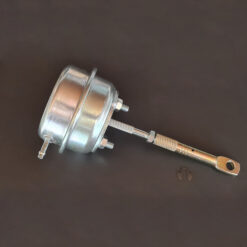
Original Turbocharger Actuator Land Rover 3.0 295 BHB Turbo no 824756


3. Turbo underboost fault codes
Underboost means the engine is receiving less boost pressure than expected. This may be caused by boost leaks, split hoses, intercooler problems, vacuum faults or a worn turbocharger, but the actuator is also a common cause.
If the actuator does not close the wastegate properly or does not move the VNT mechanism into the correct position, the turbo will not build enough pressure. The ECU then detects that actual boost is lower than requested boost.
Typical symptoms of underboost include:
- low power at all speeds,
- slow turbo response,
- black smoke on diesel engines,
- limp mode under load,
- poor fuel economy,
- turbo-related engine warning light.
Before replacing parts, the whole boost system should be checked. However, if the actuator does not move smoothly or fails electronic testing, a replacement actuator may be the correct repair.
4. Turbo overboost fault codes
Overboost means the turbo is producing more boost pressure than the ECU expects. This can be just as serious as underboost because excessive boost can increase engine stress and trigger protective limp mode.
A faulty actuator can cause overboost if it fails to open the wastegate or if it keeps the variable vanes in a position that creates too much boost. Carbon build-up in the turbo mechanism can also prevent the actuator from moving the vanes correctly.
Common signs of overboost include:
- sudden power followed by limp mode,
- engine warning light after hard acceleration,
- boost pressure too high fault code,
- surging acceleration,
- inconsistent turbo response.
If your mechanic confirms that the actuator is faulty and the turbocharger itself is still serviceable, replacing the actuator may be a more targeted solution than replacing the whole turbo assembly.
5. Engine warning light
A turbo actuator fault can trigger the engine management light. The warning light itself does not prove that the actuator is the problem, but it tells you the ECU has stored fault information that should be read with diagnostic equipment.
On modern vehicles, electronic turbo actuators are monitored very closely. The ECU may detect that the actuator is not responding, moving too slowly, stuck outside its expected range or reporting the wrong position.
Possible actuator-related diagnostic areas include:
- actuator position sensor fault,
- turbo boost control fault,
- low boost pressure,
- excessive boost pressure,
- electrical circuit fault,
- actuator calibration or adaptation issue.
For related components, sensors and smaller turbo control parts, check the turbocharger components category.
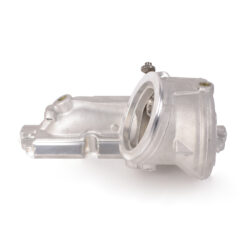
Turbocharger Housings
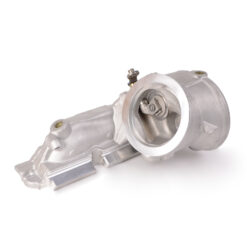
Turbocharger Housing BMW 1, 2, 3, Series, MINI 1.2-1.5 101/135HP 7636784.


TURBOCHARGER COMPONENTS
Genuine Turbocharger EXHAUST MANIFOLD VAUXHALL INSIGNA ASTRA ZAFIRA 2.0 CDTI


TURBOCHARGER COMPONENTS
Turbocharger Manifold 1.5 dCi Turbo 54399700127 for Dacia Nissan Renault


TURBOCHARGER COMPONENTS
Turbocharger EXHAUST MANIFOLD Turbocharger 831120 Mercedes E Class 220 CDI
6. Inconsistent boost or power coming and going
A failing actuator does not always stop working completely. Sometimes it works intermittently. This can make the car feel normal one moment and weak the next.
Intermittent actuator problems are common when:
- the electronic motor is wearing out,
- the internal gears are damaged,
- the actuator position sensor gives unstable readings,
- vacuum supply is inconsistent,
- the actuator rod sticks only under heat,
- wiring or connectors are affected by vibration.
This type of fault can be frustrating because the car may pass a basic visual inspection. A live diagnostic test, actuator movement test or boost pressure log may be needed to confirm the cause.
7. Poor fuel economy
If the actuator cannot control boost correctly, the engine may not operate efficiently. On diesel engines especially, incorrect boost can affect air-fuel balance and combustion quality.
When the engine receives too little air, it may burn fuel less efficiently. When boost control is unstable, the ECU may adjust fuelling and torque output to protect the engine. The driver may then press the accelerator harder to get the same performance, which increases fuel consumption.
A bad actuator is not the only possible reason for poor fuel economy, but when poor MPG appears together with weak acceleration, smoke, warning lights or turbo fault codes, the actuator should be checked.
8. Unusual turbo noises
The actuator itself may not always make a loud noise, but actuator problems can change how the turbo behaves. You may hear unusual whistling, fluttering, hissing or surging if boost pressure is not being controlled properly.
Noise can also come from other turbo system issues, including boost leaks, damaged compressor wheels, worn bearings or cracked hoses. If the turbocharger is physically damaged, actuator replacement alone will not solve the problem.
If the turbo core is worn or damaged, a replacement turbocharger cartridge may be needed. If the full unit is damaged, check complete turbochargers.


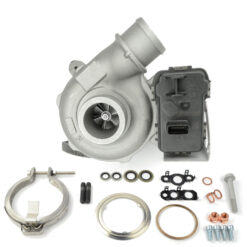


Electronic turbo actuator symptoms
Electronic turbo actuators are common on modern vehicles. They provide precise control, but they can also fail electronically or mechanically. Because they communicate with the ECU, diagnostic equipment can often identify actuator faults more accurately than with older vacuum systems.
Common electronic turbo actuator symptoms include:
- engine warning light,
- limp mode,
- actuator position fault,
- no actuator movement during test,
- clicking or buzzing from the actuator,
- incorrect boost pressure,
- calibration or adaptation failure,
- communication fault with the ECU.
Electronic actuator faults should be diagnosed carefully because wiring, plugs, water ingress, ECU signals and turbo vane stiffness can all create similar symptoms. If the actuator motor is damaged or the internal sensor is faulty, replacement is usually required.
Vacuum turbo actuator symptoms
Vacuum turbo actuators rely on vacuum pressure to move the actuator rod. If the actuator diaphragm, vacuum hose, solenoid or vacuum supply fails, the turbo may not respond correctly.
Common vacuum actuator symptoms include:
- actuator rod not moving,
- weak boost at low RPM,
- boost only appearing at higher revs,
- split or loose vacuum hoses,
- oil contamination around vacuum lines,
- poor response under load,
- limp mode caused by boost deviation.
A simple vacuum test can often show whether the actuator holds vacuum and whether the rod moves smoothly. If the actuator does not hold vacuum, the diaphragm may be damaged.
Can a bad turbo actuator damage the turbo?
Yes, a bad actuator can contribute to turbocharger stress if it causes incorrect boost control for a long time. Overboost can increase pressure and temperature, while underboost can affect engine performance and exhaust behaviour. A sticking VNT mechanism can also place extra load on the actuator and turbo control system.
However, the actuator and turbo should be diagnosed as a complete system. Sometimes the actuator is blamed when the real cause is carbon build-up inside the turbo. In other cases, the turbo is replaced when only the actuator was faulty.
That is why the best approach is to check:
- fault codes,
- live boost pressure,
- actuator movement,
- vacuum supply or electrical signal,
- turbo vane or wastegate movement,
- boost pipes and intercooler leaks,
- condition of the turbocharger cartridge.


Land Rover/Range Rover
Turbocharger Chra 452055 Land-Rover Defender Discovery Range Rover 2.5


Land Rover/Range Rover
Turbocharger Chra Land Rover , Range Rover Sport 2993ccm 211-340BHP 827153


TURBOCHARGER CARTRIDGES
Turbocharger Chra 792290 Volkswagen T5 T6 Transporter 2.0 TDI 1968 ccm 84-140HP
Can you drive with a faulty turbo actuator?
You should avoid driving hard with a suspected faulty turbo actuator. If the car is in limp mode, producing too much boost, smoking heavily or showing warning lights, continuing to drive can increase the risk of further damage.
Short, gentle driving to a garage may be possible in some cases, but this depends on the fault. If the engine is making unusual noises, losing power suddenly, smoking excessively or running very badly, it is safer to stop and arrange professional inspection.
A faulty actuator is not just a performance issue. It can affect engine protection, emissions, fuel economy and turbocharger lifespan.
Turbo actuator failure causes
Turbo actuators can fail for several reasons. Some failures are inside the actuator itself, while others are caused by problems in the surrounding turbo system.
Carbon build-up
Carbon deposits can make VNT vanes stiff or jammed. The actuator then struggles to move the mechanism. In this situation, the actuator may appear faulty even though the turbo mechanism is the original cause.
Water or heat damage
Electronic actuators work in a hot environment. Over time, heat, moisture and vibration can damage internal electronics, gears or sensors.
Vacuum leaks
On vacuum-controlled systems, split hoses, weak vacuum pumps or faulty solenoids can prevent the actuator from moving correctly.
Worn internal gears
Electronic actuators often use internal gears. If these wear or break, the actuator may click, stick or fail to reach the required position.
Turbo mechanism stiffness
If the wastegate or variable vane mechanism is stiff, the actuator has to work harder. This can eventually damage the actuator or trigger position faults.
How to diagnose a turbo actuator problem
A proper diagnosis should confirm whether the actuator is faulty or whether another turbo system problem is creating similar symptoms.
The usual checks include:
- reading diagnostic fault codes,
- checking live boost pressure data,
- testing actuator movement,
- checking vacuum supply on vacuum systems,
- checking wiring and connectors on electronic systems,
- inspecting boost hoses and intercooler pipes,
- checking whether the turbo vanes or wastegate move freely.
For many vehicles, the actuator may also need calibration, adaptation or alignment after replacement. This is especially important with electronic actuators.
Turbo actuator replacement: when is it the right solution?
Replacing the turbo actuator is usually the right solution when the actuator itself has failed and the turbo mechanism is still in good condition. It may be more cost-effective than replacing the complete turbocharger, especially when the turbo core, housings and wheels are not damaged.
Actuator replacement may be suitable when:
- the actuator motor has failed,
- the position sensor is faulty,
- the actuator does not move during testing,
- the actuator does not hold vacuum,
- the internal gears are damaged,
- the fault returns after wiring and vacuum checks,
- the turbo mechanism moves freely by hand.
If the turbocharger is worn, leaking oil, making heavy noise or has damaged wheels, a complete turbocharger replacement may be the better option.


Turbo actuator symptoms by problem type
| Symptom | Possible actuator-related cause | What to check |
|---|---|---|
| Loss of power | Actuator not reaching correct position | Boost pressure, actuator movement, fault codes |
| Limp mode | Underboost or overboost detected | Live boost data, VNT movement, wastegate control |
| Engine warning light | Electronic actuator or boost control fault | Diagnostic codes, wiring, actuator signal |
| Inconsistent acceleration | Intermittent actuator movement | Actuator test, heat-related faults, connectors |
| Poor fuel economy | Incorrect boost control | Air leaks, boost pressure, fuelling behaviour |
| Overboost | Wastegate or vanes not opening correctly | VNT mechanism, actuator rod, carbon build-up |
| Underboost | Wastegate open, actuator weak or vacuum fault | Vacuum hoses, solenoid, actuator diaphragm |
Choosing the correct replacement turbo actuator
When buying a replacement turbo actuator, matching the correct part is essential. Actuators can look similar but differ by turbo number, engine code, connector type, calibration range, rod length and vehicle application.
Before ordering, check:
- vehicle make and model,
- engine size and power output,
- turbocharger number,
- OEM part number,
- actuator type,
- connector shape,
- whether calibration is required.
If you are not sure which part fits your vehicle, compare the part number carefully or contact the supplier before ordering. Atom Car Parts stocks a wide range of turbo actuators, turbocharger components, CHRA turbo cartridges and complete turbochargers.
FAQ: turbo actuator symptoms
What happens when a turbo actuator fails?
When a turbo actuator fails, the turbocharger may not control boost pressure correctly. This can cause loss of power, limp mode, engine warning light, underboost, overboost, poor acceleration and inconsistent turbo response.
Can a turbo actuator cause limp mode?
Yes. A faulty turbo actuator can cause limp mode if the ECU detects that boost pressure is too low, too high or not matching the requested value. Electronic actuator position faults can also trigger limp mode.
Is a turbo actuator the same as a turbocharger?
No. The actuator is a control component attached to or used with the turbocharger. The turbocharger creates boost, while the actuator controls the wastegate or variable vane mechanism that regulates boost pressure.
Can I replace only the turbo actuator?
Yes, in many cases the actuator can be replaced separately if the turbocharger itself is still in good condition. However, the turbo mechanism must move freely and the correct replacement actuator must be fitted and calibrated where required.
How do I know if the turbo or actuator is faulty?
The best way is to perform a full diagnosis. Check fault codes, live boost data, actuator movement, vacuum or electrical control, boost leaks and the mechanical condition of the turbocharger. Symptoms alone are not always enough to identify the exact part at fault.
Can a faulty actuator cause overboost?
Yes. If the actuator does not open the wastegate or does not move the variable vanes correctly, the turbo may produce too much boost. This can trigger an overboost fault and limp mode.
Can a faulty actuator cause underboost?
Yes. If the actuator does not close the wastegate or cannot move the vanes into the correct position, the turbo may fail to build enough boost. This can cause weak acceleration and underboost fault codes.
Does a new turbo actuator need calibration?
Many electronic turbo actuators require calibration, adaptation or correct alignment after installation. This depends on the vehicle and actuator type. Incorrect calibration can cause fault codes or poor boost control even with a new actuator.
Final advice: diagnose before replacing the whole turbo
Turbo actuator symptoms can look very similar to turbocharger failure, boost leaks, vacuum faults, sensor problems or carbon build-up. That is why replacing parts without diagnosis can become expensive.
If the actuator is confirmed as the faulty component and the turbocharger is still mechanically sound, fitting the correct replacement actuator can be a practical and cost-effective repair. Browse the turbo actuator category or check related turbocharger components, turbo cartridges and complete turbochargers if your turbo system needs more than actuator replacement.