
Uncategorised
NOx Sensor Symptoms, Price and Replacement Guide for BMW and Mercedes
A NOx sensor is one of the key emissions-related components in many modern BMW and Mercedes vehicles. It monitors nitrogen oxide levels in the exhaust system and sends this information to the engine control unit, helping the vehicle manage emissions, fuel efficiency and exhaust aftertreatment systems such as SCR and AdBlue.
When a NOx sensor starts to fail, the symptoms can be confusing. The vehicle may still drive, but the dashboard can show an engine management light, emissions warning, AdBlue message or reduced power mode. In many cases, the problem is only confirmed after reading diagnostic fault codes. For BMW and Mercedes owners, the most important step is not only recognising the symptoms, but also choosing the correct replacement sensor by part number, vehicle compatibility and sensor position.
This guide explains what a NOx sensor does, how to recognise common NOx sensor symptoms, what affects NOx sensor price, how BMW and Mercedes NOx sensor problems usually appear, and how to choose the right replacement part without wasting money on an incompatible sensor.
If you already know the part you need, you can browse the NOx sensor range, including BMW NOx sensors and Mercedes NOx sensors.
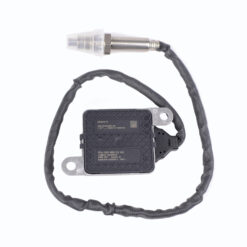
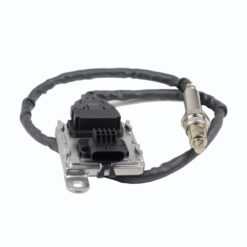
What Is a NOx Sensor?
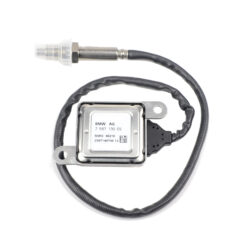
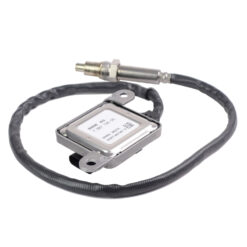
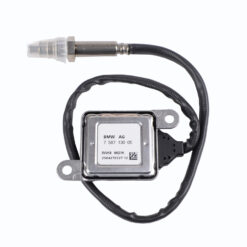
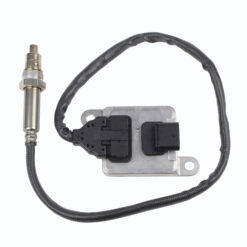
A NOx sensor measures the amount of nitrogen oxides in the exhaust gases. Nitrogen oxides are produced during combustion, especially when the engine runs at high temperatures. Because modern vehicles must meet strict emissions standards, the engine management system needs accurate information about exhaust gas composition. The NOx sensor provides that information.
The sensor is usually fitted in the exhaust system and is often connected to its own control module and wiring. It is not the same as a basic oxygen sensor. A NOx sensor is designed specifically to measure nitrogen oxide levels, while an oxygen sensor measures oxygen content. Both are exhaust sensors, but they perform different jobs and cannot simply be swapped.
On some vehicles, there may be more than one NOx sensor. One sensor may be positioned before the SCR catalyst or emissions control section, while another may be positioned after it. This allows the vehicle to compare readings and check whether the emissions system is reducing nitrogen oxides correctly.
What Does a NOx Sensor Do?
The main function of a NOx sensor is to help the vehicle monitor and control nitrogen oxide emissions. The engine control unit uses the sensor signal to understand what is happening inside the exhaust system. On vehicles with SCR and AdBlue systems, NOx sensor readings can also help the vehicle check whether the aftertreatment system is working correctly.
When the NOx sensor works properly, the vehicle can manage emissions more accurately. When it fails, the engine control unit may receive no signal, an incorrect signal or a signal that does not match expected values. This can trigger warning lights, fault codes, reduced power, AdBlue warnings or emissions-related messages.
A faulty NOx sensor can also make diagnostics more difficult, because the vehicle may no longer be able to trust the data it receives from the exhaust system. That is why accurate diagnosis is important before replacing parts.
Common NOx Sensor Symptoms
A failing NOx sensor can cause several symptoms. Some symptoms are visible to the driver, while others only appear during a diagnostic scan. The exact behaviour depends on the vehicle, engine, emissions system and whether the sensor has failed completely or is only giving inaccurate readings.
Engine management light
One of the most common NOx sensor symptoms is the engine management light on the dashboard. This warning light does not automatically prove that the NOx sensor is faulty, but it does mean the vehicle has detected a problem that needs proper diagnosis.
Emissions warning message
Many modern BMW and Mercedes vehicles show emissions-related warnings when the exhaust aftertreatment system cannot be monitored correctly. A faulty NOx sensor may cause the car to display a message related to emissions, exhaust system, AdBlue, SCR system or engine fault.
AdBlue or SCR system warning
On diesel vehicles with SCR technology, NOx sensor data is important because the vehicle uses it to monitor whether AdBlue dosing is helping to reduce nitrogen oxide emissions. A faulty NOx sensor may appear together with AdBlue countdown messages, SCR fault warnings or emissions system faults.
Limp mode or reduced engine power
If the vehicle cannot confirm that the emissions system is working correctly, it may reduce engine power. This is often described as limp mode. The car may feel slow, restricted or unwilling to accelerate normally. In some cases, the vehicle may limit revs or turbo response.
Increased fuel consumption
A faulty NOx sensor can affect how efficiently the engine and emissions system operate. If the engine management system receives unreliable exhaust data, fuel economy may suffer. The increase may be small at first, but it can become more noticeable if the fault is ignored.
Failed emissions test
A NOx sensor fault can contribute to emissions problems. If the vehicle cannot monitor or control emissions correctly, it may struggle during an MOT or emissions-related inspection. Even if the vehicle still drives normally, an active emissions fault should not be ignored.
Diagnostic fault codes
In many cases, NOx sensor failure is confirmed through diagnostic fault codes. These may relate to sensor signal, heater circuit, communication, plausibility, sensor ageing, sensor position or SCR efficiency. A diagnostic scan is usually the most reliable way to identify the actual cause of the warning.
NOx Sensor Symptoms at a Glance
| Symptom | What it may suggest | What to check next |
|---|---|---|
| Engine management light | The ECU has detected an engine or emissions fault | Read diagnostic fault codes |
| Emissions warning | The vehicle cannot confirm correct emissions control | Check NOx sensor, SCR system and related sensors |
| AdBlue warning | The SCR system may not be operating as expected | Check NOx readings, AdBlue injector, tank and pump |
| Limp mode | The engine may be limiting power because of a fault | Diagnose before replacing parts |
| Higher fuel consumption | The engine may be working with unreliable sensor data | Compare live data and stored fault codes |
| Failed emissions test | The exhaust aftertreatment system may not be functioning correctly | Inspect NOx sensor, catalyst, SCR and exhaust condition |
BMW NOx Sensor Problems
BMW NOx sensor problems are common search topics because many BMW models rely heavily on accurate exhaust gas monitoring. When the sensor fails, the vehicle may show an engine management light, run less efficiently, store NOx-related fault codes or display emissions-related warnings.
For BMW owners, the most important thing is correct part matching. A BMW NOx sensor may look similar to another sensor, but that does not mean it will work with every BMW engine. Compatibility can depend on model code, engine code, production year, original part number and connector type.
For example, selected BMW 1 Series and 3 Series vehicles with N43 petrol engines may require a sensor such as BMW NOx sensor 11787587130. Other BMW petrol models with N53 engines may require a different part, such as BMW NOx sensor 11787582327.
This is why buying a BMW NOx sensor only by vehicle name can be risky. A part listed for a BMW 3 Series may not fit every 3 Series version. Always compare the original part number, engine type and compatibility information before ordering.
How to choose the correct BMW NOx sensor
The safest way to choose the correct BMW NOx sensor is to check the original part number printed on the old sensor or shown in the parts system. If the number from your vehicle appears in the replacement listing, that is a strong compatibility signal. You should also check the body code, engine code and production period.
BMW model codes such as E81, E82, E87, E88, E90, E91, E92, E93, E60, E61, E63 and E64 can help identify the vehicle family, but they are not always enough on their own. Engine type and original part number are usually more reliable.
Mercedes NOx Sensor Problems
Mercedes NOx sensor problems can appear as engine warning lights, emissions messages, AdBlue faults, SCR warnings or stored diagnostic codes. Many Mercedes diesel models use NOx sensor readings as part of the SCR and emissions control strategy, so a faulty sensor can quickly create dashboard warnings.
As with BMW, Mercedes NOx sensors must be matched carefully. The correct sensor can depend on model, engine, production year, sensor position and original part number. Some vehicles may use more than one NOx sensor, so replacing the wrong one may not solve the problem.
For selected Mercedes-Benz applications, Atom Car Parts lists a Mercedes-Benz NOx sensor A0009053009. This type of part number is especially important because Mercedes owners often search by both model and original equipment reference.
How to choose the correct Mercedes NOx sensor
Before ordering a Mercedes NOx sensor, confirm the original part number and sensor position. A diagnostic report may identify a sensor before or after the catalyst, upstream or downstream, sensor 1 or sensor 2. This matters because the vehicle may use different sensors in different positions.
If the vehicle has an AdBlue countdown or SCR warning, do not automatically assume the NOx sensor is the only problem. The AdBlue pump, injector, tank, wiring, crystallisation, pressure sensor or SCR catalyst may also be involved. A proper diagnostic check helps avoid replacing the wrong component.
NOx Sensor Price: What Affects the Cost?
NOx sensor price can vary depending on the vehicle brand, sensor type, part number, supplier, availability and whether the sensor includes the control module and wiring. BMW and Mercedes NOx sensors are often more expensive than simple exhaust sensors because they are more specialised components.
The cheapest NOx sensor is not always the best choice. If the sensor does not match the vehicle correctly, it may not communicate with the ECU, may trigger new fault codes or may fail to remove the original warning. In that situation, the driver pays twice: once for the wrong part and again for the correct replacement.
When comparing NOx sensor prices, check more than the headline cost. Look at the original part numbers, vehicle compatibility, product photos, connector type, warranty information and supplier details. A well-matched sensor can save time, labour and diagnostic frustration.
Can You Drive With a Faulty NOx Sensor?
In some cases, a car with a faulty NOx sensor may still drive, but it should not be ignored. The vehicle may enter reduced power mode, show emissions warnings, increase fuel consumption or create AdBlue-related restrictions. Some vehicles may eventually limit starting if emissions system faults remain unresolved.
Driving a short distance to a workshop is different from continuing to use the car for weeks with active warning lights. A faulty NOx sensor can also make it harder to identify other exhaust or SCR system problems because the ECU may be working with unreliable information.
If the vehicle shows a NOx sensor fault, emissions warning, AdBlue countdown or engine management light, the sensible approach is to diagnose the fault properly and replace the correct component once the problem is confirmed.
How Is a Faulty NOx Sensor Diagnosed?
A faulty NOx sensor is usually diagnosed with a suitable scan tool. The technician reads stored and pending fault codes, checks freeze-frame data, inspects wiring and connectors, and compares live NOx readings with expected values. In some cases, they may also check the AdBlue system, SCR catalyst, exhaust leaks, temperature sensors and ECU software.
A diagnostic scan can help identify whether the fault relates to sensor signal, heater circuit, communication, plausibility, sensor ageing or the emissions system as a whole. This matters because replacing the sensor without checking related systems can sometimes leave the warning light active.
Typical diagnostic checks
- Reading stored NOx sensor and emissions-related fault codes.
- Checking whether the fault relates to signal, heater circuit or communication.
- Confirming whether the upstream or downstream sensor is affected.
- Inspecting wiring, plugs and sensor control module condition.
- Checking for exhaust leaks near the sensor.
- Comparing live NOx readings before and after the emissions control system.
- Confirming the original part number before ordering a replacement.
How to Choose the Correct NOx Sensor
The correct NOx sensor is the one that matches the vehicle’s original specification. Vehicle make and model are useful starting points, but they are not always enough. The original part number is usually the most reliable way to choose the correct replacement.
Check the original part number
The original part number may be printed on the old sensor, shown on a previous invoice, found in the parts catalogue or identified by a specialist. BMW and Mercedes owners often search using part numbers because this reduces the risk of ordering an incompatible sensor.
Check the vehicle application
Compare the replacement listing with your exact vehicle model, engine, production year and body code. Do not assume that every NOx sensor listed for a BMW 3 Series or Mercedes C-Class fits every version of that model.
Check the connector and cable
NOx sensors can look similar in photos, but the connector shape, cable length and module design may differ. If the connector or cable does not match, the part may not fit correctly.
Check the sensor position
Some vehicles use more than one NOx sensor. The replacement must match the correct position in the exhaust system. A sensor before the catalyst may not be the same as a sensor after the catalyst.
Check warranty and supplier information
Because NOx sensors are electronic emissions components, warranty and supplier reliability matter. Clear product information, visible part references and compatibility details help reduce the risk of ordering the wrong part.
BMW NOx Sensor vs Mercedes NOx Sensor
BMW and Mercedes NOx sensors perform the same general job, but they are not universal parts. Each vehicle manufacturer uses specific sensors, connectors, control modules and ECU communication requirements. A sensor that works on one BMW engine will not automatically work on another BMW engine, and it certainly should not be treated as interchangeable with a Mercedes sensor unless the part number and specification match exactly.
The safest rule is simple: buy by compatibility, not by appearance. Two NOx sensors may look very similar online but have different electronics, cable lengths, sensor positions or communication requirements. If the wrong sensor is fitted, the vehicle may continue to show warnings or store new fault codes.
Should You Replace One NOx Sensor or Both?
Some vehicles have more than one NOx sensor. Whether you should replace one or both depends on the diagnostic result, vehicle mileage, sensor condition, labour access and whether the other sensor is also showing weak or unreliable readings.
If diagnostics clearly identify one failed sensor, replacing only that sensor may be enough. If both sensors are old, contaminated or showing inconsistent readings, replacing both may be considered. However, replacing both without evidence is not always necessary. Good diagnostics should guide the decision.
Can a NOx Sensor Be Cleaned?
Many drivers ask whether a NOx sensor can be cleaned instead of replaced. In most cases, cleaning is not a reliable repair for a failed NOx sensor. The problem is often internal sensor ageing, heater circuit failure, signal fault, communication fault or electronic failure inside the sensor module.
External soot or deposits may be visible, but cleaning the outside of the sensor will not repair internal electronics. If diagnostics confirm that the NOx sensor itself has failed, replacement is usually the more reliable solution.
Can a Faulty NOx Sensor Cause AdBlue Problems?
Yes, a faulty NOx sensor can be linked with AdBlue warnings on vehicles with SCR systems. The vehicle uses NOx readings to check whether nitrogen oxide emissions are being reduced correctly. If the sensor data is missing or unreliable, the ECU may not be able to confirm that the system is working as expected.
However, not every AdBlue warning is caused by a NOx sensor. AdBlue faults can also be caused by the AdBlue injector, tank, pump, heater, level sensor, pressure sensor, crystallisation, wiring or SCR catalyst. This is why proper diagnosis is important before replacing parts.
When Should You Replace a NOx Sensor?
You should consider replacing a NOx sensor when diagnostics confirm that the sensor has failed, the fault matches the symptoms, related wiring or exhaust issues have been checked, and the correct replacement part has been identified.
Replacement is especially important if the vehicle is showing repeated engine management lights, emissions warnings, AdBlue countdown messages, limp mode or MOT-related emissions problems. Clearing the fault code without replacing the failed sensor may only hide the problem temporarily.
NOx Sensor Buying Checklist
| Check | Why it matters |
|---|---|
| Original part number | The most reliable way to match the correct replacement sensor |
| Vehicle make and model | Useful starting point, but not enough on its own |
| Engine code | BMW and Mercedes engines may use different sensor versions |
| Production year | Sensor specification may change during a model generation |
| Sensor position | Some vehicles use upstream and downstream NOx sensors |
| Connector and cable | Incorrect connector or cable length can prevent installation |
| Fault code confirmation | Helps avoid replacing the wrong component |
| Warranty | Important for electronic emissions-related parts |
NOx Sensor Replacement: What to Expect
NOx sensor replacement usually involves locating the sensor in the exhaust system, disconnecting the wiring and control module, removing the old sensor, installing the new one, clearing fault codes and checking live data after replacement. On some vehicles, access is simple. On others, heat, corrosion and tight engine bay packaging can make removal more difficult.
After replacement, some vehicles may need a short drive cycle, diagnostic reset or adaptation before all emissions readiness checks complete. Depending on the model, a garage may also check whether the SCR system, AdBlue dosing and exhaust temperature readings are working correctly.
Because a NOx sensor is part of the emissions system, the wiring should be routed correctly and kept away from excessive heat, moving parts and sharp edges. A poorly fitted sensor or damaged cable can quickly create new faults.
Why the Correct NOx Sensor Matters
A NOx sensor is not a universal accessory. It is an electronic emissions component that communicates with the vehicle’s engine management system. If the wrong part is fitted, the ECU may reject the signal, continue showing warning lights or store additional fault codes.
Choosing the correct sensor helps avoid repeated labour, unnecessary returns and wasted diagnostic time. This is especially important for BMW and Mercedes vehicles, where similar-looking sensors may have different part numbers and applications.
Where to Buy BMW and Mercedes NOx Sensors
Atom Car Parts supplies NOx sensors for selected BMW and Mercedes applications. You can browse the full NOx sensor category, view BMW NOx sensor options, or check the Mercedes NOx sensor range.
For BMW owners, available options include the BMW NOx sensor for selected N43 models and the BMW NOx sensor for selected N53 petrol models. For Mercedes owners, the Mercedes-Benz NOx sensor A0009053009 is available for selected compatible models.
Before ordering, compare your original part number, vehicle details, connector and sensor position with the product listing. This helps ensure that the replacement sensor is suitable for your vehicle.
Frequently Asked Questions About NOx Sensors
What are the most common NOx sensor symptoms?
The most common NOx sensor symptoms include engine management light, emissions warning, AdBlue or SCR fault messages, limp mode, poor fuel economy, failed emissions checks and NOx-related diagnostic fault codes.
How much does a NOx sensor cost?
NOx sensor price depends on the vehicle, brand, part number, sensor position, supplier and whether the sensor includes the control module and wiring. The current price should always be checked on the relevant product page before ordering.
Can I replace a NOx sensor myself?
Some experienced DIY users may be able to replace a NOx sensor, but correct diagnosis, safe removal, correct part matching and post-replacement checks are important. If the sensor is seized, difficult to access or linked to complex SCR faults, professional fitting is usually safer.
Is a NOx sensor the same as an oxygen sensor?
No. A NOx sensor measures nitrogen oxide levels, while an oxygen sensor measures oxygen content in the exhaust. Both are exhaust sensors, but they perform different roles and are not interchangeable.
Can a faulty NOx sensor cause limp mode?
Yes, a faulty NOx sensor can contribute to limp mode on some vehicles, especially when the engine management system cannot confirm that emissions control is working correctly.
Can a NOx sensor cause AdBlue warnings?
Yes, on vehicles with SCR systems, faulty NOx sensor data can be linked with AdBlue or emissions warnings. However, AdBlue warnings can also be caused by pumps, injectors, tanks, wiring, crystallisation or SCR catalyst problems, so diagnostics are important.
How do I know which NOx sensor I need?
The best way is to match the original part number from your existing sensor or parts system with the replacement listing. You should also check vehicle model, engine, production year, connector type and sensor position.
Are BMW NOx sensors and Mercedes NOx sensors interchangeable?
No. BMW and Mercedes NOx sensors should be matched by exact part number and vehicle compatibility. Similar appearance does not mean the sensor will work correctly.
Can I clean a NOx sensor instead of replacing it?
Cleaning is usually not a reliable fix for a failed NOx sensor. If the fault is caused by internal failure, heater circuit issues, signal problems or electronic communication faults, replacement is normally required.
Will replacing the NOx sensor clear the warning light?
If the NOx sensor is the confirmed cause of the fault and the correct replacement is fitted, the warning can usually be cleared after repair. In some cases, the vehicle may need diagnostic reset, adaptation or a drive cycle before all system checks complete.
Final Advice Before Buying a NOx Sensor
A NOx sensor fault should not be ignored, especially if the vehicle is showing emissions warnings, AdBlue messages, limp mode or MOT-related problems. The key to a successful repair is accurate diagnosis and correct part matching.
Before ordering, confirm the original part number, check whether your vehicle uses more than one NOx sensor, compare the connector and cable, and make sure the replacement is suitable for your BMW or Mercedes model. If the part number matches and the fault has been properly diagnosed, replacing the NOx sensor can help restore correct emissions monitoring and remove persistent warning messages.
Browse the current NOx sensor range or go directly to BMW NOx sensors and Mercedes NOx sensors to find a compatible replacement.