
Uncategorised
NOx Sensor Mercedes: Symptoms, Faults, Replacement and Buying Guide
Mercedes emissions system guide
A Mercedes NOx sensor is one of the key parts of the exhaust emissions system. When it starts to fail, the car may show an engine warning light, AdBlue warning, limp mode, poor fuel economy or repeated fault codes even after clearing the ECU. This guide explains what a Mercedes NOx sensor does, how to recognise common symptoms, how mechanics can diagnose the fault properly and how to choose the correct replacement part for your vehicle.
For replacement parts, you can browse the full NOx sensors category, go directly to Mercedes NOx sensors, or check the product page for the NOX SENSOR FOR MERCEDES-BENZ C E G S CLA A0009053009.
Mercedes NOx sensor fault: quick answer
A faulty Mercedes NOx sensor can send incorrect nitrogen oxide readings to the ECU. The engine control unit then cannot accurately monitor the exhaust gases before or after the SCR catalyst, so the AdBlue system, emissions control and engine management may stop working correctly. The most common signs are an engine management light, AdBlue countdown message, reduced power, failed emissions test, high fuel consumption and stored NOx sensor fault codes.
The best repair route is not to replace parts blindly. The vehicle should be scanned with a diagnostic tool, the live NOx readings should be checked, the wiring and connector should be inspected, and related AdBlue, SCR, DPF and exhaust leak issues should be ruled out. Once the NOx sensor is confirmed as faulty, the replacement should be matched by part number, connector, cable length, sensor position and vehicle compatibility.
Shop Mercedes NOx sensors
Use the product listing below to check current availability, vehicle compatibility and part number references for Mercedes NOx sensor replacement.
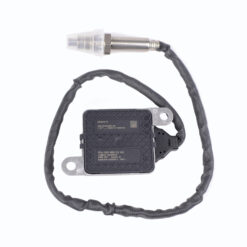
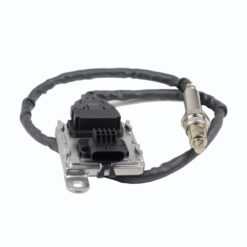
What does a NOx sensor do in a Mercedes?
A NOx sensor measures the level of nitrogen oxides in the exhaust gases. In many modern Mercedes diesel vehicles, especially models equipped with SCR and AdBlue systems, the NOx sensor helps the ECU decide whether the emissions system is reducing harmful gases correctly. The car may use one NOx sensor before the SCR catalyst and another after the catalyst, depending on the engine, model year and emissions package.
The sensor is not just a passive probe. It works with an electronic control module, communicates with the engine management system and provides readings that influence AdBlue dosing, emissions monitoring and fault detection. When the NOx sensor reports values that are implausible, too high, too low or missing, the ECU may store a fault code and protect the system by limiting performance or triggering an AdBlue warning.
For drivers, the NOx sensor is usually noticed only when something goes wrong. For mechanics, it is a diagnostic component that must be understood in context. A NOx fault code can be caused by a failed sensor, but it can also be triggered by wiring faults, exhaust leaks, SCR efficiency problems, crystallised AdBlue, poor AdBlue dosing, contamination, previous repairs or incorrect parts fitted to the vehicle.
Why a Mercedes NOx sensor fault should not be ignored
A Mercedes NOx sensor fault is not usually a cosmetic warning. It can affect the way the emissions system works, and in some cases it may lead to an AdBlue countdown or a no-start warning if the vehicle believes the emissions system is no longer functioning correctly. Continuing to drive for too long with an unresolved fault can also make diagnosis harder because additional faults may appear in the SCR, DPF or AdBlue system.
For owners, the risk is inconvenience, MOT failure, loss of performance and repeated garage visits. For workshops, the risk is replacing the wrong component, returning the vehicle too early or missing the actual root cause. That is why a correct diagnostic process is essential before ordering a new Mercedes NOx sensor.
Browse NOx sensors for Mercedes and other vehicles
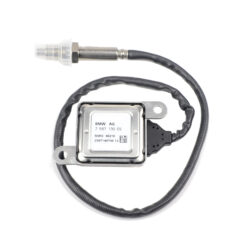
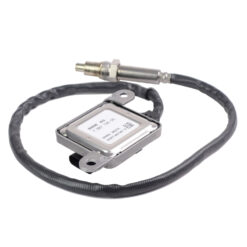
The full NOx sensor category includes Mercedes and BMW NOx sensor products, making it easier to compare available parts and choose the correct listing for the vehicle.
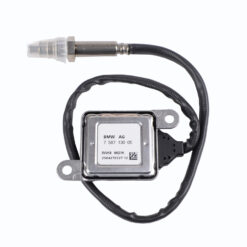
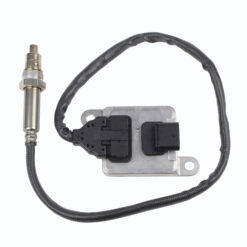
Mercedes NOx sensor symptoms
The symptoms of a faulty Mercedes NOx sensor can vary depending on the model, engine and whether the fault is intermittent or permanent. Some vehicles continue to drive almost normally at first, while others quickly enter limp mode or display an AdBlue warning. The most important point is that symptoms alone are not enough to confirm the part. Symptoms should guide the diagnosis, not replace it.
| Symptom | What the driver may notice | What the mechanic should check |
|---|---|---|
| Engine management light | The warning light appears and may return after clearing codes. | Scan all engine and emissions modules, then check NOx sensor live data and stored fault history. |
| AdBlue warning or countdown | The dashboard may show an AdBlue system fault, mileage countdown or restart warning. | Check NOx sensor readings together with AdBlue injector operation, tank faults, SCR efficiency and AdBlue quality. |
| Limp mode or reduced power | The vehicle may feel slow, limit acceleration or restrict engine power. | Confirm whether the ECU has limited torque because of an emissions fault or because of another engine issue. |
| High fuel consumption | The car may use more fuel than usual, although this symptom can have many causes. | Check live data, temperature sensors, DPF status, boost control and emissions-related adaptations. |
| MOT emissions problems | The vehicle may struggle with emissions-related testing or have unresolved warning lights. | Diagnose the complete emissions system rather than replacing only the visible fault code component. |
| Repeated NOx fault codes | The same NOx-related code returns after clearing. | Check connector condition, power supply, ground, communication, sensor position and correct part number. |
Common diagnostic fault codes associated with NOx and SCR issues may point towards the NOx sensor circuit, signal plausibility, SCR efficiency or communication faults. The exact code description depends on the diagnostic tool and Mercedes software version. A professional scan should always include freeze-frame data, live readings and the wider emissions system, not just the first fault shown on the screen.
What causes a Mercedes NOx sensor to fail?
A Mercedes NOx sensor works in a harsh environment. It is exposed to heat, exhaust gases, vibration, moisture and road contamination. Over time, the sensor element, wiring, connector or control electronics can fail. In some cases the sensor is damaged by an underlying vehicle problem, such as exhaust leaks, incorrect AdBlue dosing, contamination, water ingress or previous repair work around the exhaust system.
Age and mileage are common factors, but they are not the only ones. A low-mileage vehicle used mainly for short journeys can suffer from condensation and emissions system problems, while a high-mileage motorway vehicle may simply wear out the sensor through normal use. Mechanics should also check whether the sensor was removed previously, whether the cable has been stretched, whether the connector has been contaminated and whether the sensor fitted to the car matches the original equipment reference.
Another common issue is misdiagnosis. A car can show a NOx-related fault because the NOx reading is outside the expected range, but the cause may be poor SCR conversion, incorrect AdBlue injection or an exhaust leak before the sensor. Replacing the sensor without checking the surrounding system can lead to the same warning returning after a short drive.
Mercedes NOx sensor replacement part
Before buying, compare the part number from the existing sensor with the compatibility information on the product page. If the number, connector or vehicle application does not match, confirm compatibility before fitting.
How to diagnose a Mercedes NOx sensor fault properly
Correct diagnosis starts with a full vehicle scan. A single generic OBD reader may show a basic emissions code, but Mercedes vehicles often require more detailed data from engine and SCR-related modules. The technician should record stored codes, pending codes, freeze-frame data, mileage since fault occurrence and whether the fault is current or intermittent.
The next step is live data. A functioning NOx sensor should communicate with the ECU and provide readings that react logically under the right operating conditions. The mechanic should compare upstream and downstream values where applicable, check whether the sensor is heating correctly, and look for implausible fixed values, missing data or delayed response. Readings must be interpreted with engine temperature, exhaust temperature, AdBlue dosing status and driving conditions in mind.
Physical inspection is just as important as software diagnosis. The cable should not be melted, twisted, crushed or stretched. The connector should be dry, clean and secure. The sensor should be in the correct exhaust position. If there is an exhaust leak before or near the sensor, the reading can become misleading. If AdBlue has crystallised around an injector or exhaust joint, the real cause may be outside the NOx sensor itself.
For mechanics, a reliable diagnostic workflow is to confirm the fault code, inspect wiring and connector condition, verify power and ground if required, compare live values, test after clearing codes, perform a road test under suitable conditions, and only then replace the sensor if the evidence supports it. This saves time, reduces comebacks and protects the customer from unnecessary parts costs.
Professional notes for mechanics replacing a Mercedes NOx sensor
When replacing a Mercedes NOx sensor, the vehicle should be allowed to cool before removal because the sensor sits in the exhaust system and may be extremely hot after driving. The technician should use the correct socket, avoid damaging the cable and avoid contaminating the sensor tip. If the old sensor is seized, excessive force can damage the exhaust boss or surrounding pipework.
The replacement sensor should be checked before fitting. Compare the OE number, connector shape, cable routing, sensor body, module design and installation position. Many NOx sensors look similar, but similar does not mean interchangeable. Fitting an incorrect upstream or downstream sensor, or a sensor with the wrong control module, may create new fault codes immediately after installation.
After fitting, clear the fault codes and follow the diagnostic tool procedure required for the specific Mercedes model. Some vehicles may require adaptation, teach-in, reset values, software checks or a controlled road test before the system confirms normal operation. The final road test should include conditions that allow the emissions system to operate, rather than only a short idle test outside the workshop.
Available NOx sensor products
Use this section to browse current NOx sensor products and select the correct listing by vehicle, engine and part number.
Mercedes NOx sensor replacement guide
Replacing a Mercedes NOx sensor is usually straightforward for an experienced technician, but the surrounding diagnosis can be more important than the mechanical replacement itself. The sensor is fitted into the exhaust system and connected to the vehicle wiring harness. The exact location depends on the engine and whether the vehicle has one or more NOx sensors.
Before removal, the technician should confirm the part number from the old sensor. This number is often the safest way to choose the correct replacement. Vehicle registration lookup can help, but Mercedes emissions components may vary by engine code, production year, market, exhaust configuration and software version. The part number printed on the old sensor, combined with VIN confirmation, gives a much stronger match.
Once the new NOx sensor is fitted, the cable must be routed correctly. It should not touch hot exhaust parts, sharp brackets or moving components. The connector should click securely into place. After installation, the vehicle should be scanned again, codes cleared and live data checked. A proper post-repair test is especially important if the vehicle previously had an AdBlue countdown or limp mode.
How to choose the correct Mercedes NOx sensor
The most important buying rule is simple: do not choose a Mercedes NOx sensor only by the model name. Mercedes C-Class, E-Class, A-Class, CLA, GLA, CLS, G-Class and S-Class vehicles may use different sensors depending on engine, year, emissions standard and exhaust layout. The same model can also have different sensors before and after the SCR catalyst.
When buying, compare the vehicle details with the product listing and check the original part number from the sensor already fitted to the car. If the car has had previous repairs, do not assume the fitted sensor is correct. Compare it with the VIN and diagnostic information where possible.
| Buying check | Why it matters |
|---|---|
| OE or reference number | This is the strongest match when selecting a replacement NOx sensor. |
| Vehicle model and year | Mercedes emissions systems can vary between generations and production dates. |
| Engine type | Different diesel and petrol applications can use different sensor specifications. |
| Sensor position | Upstream and downstream sensors may not be interchangeable. |
| Connector and cable length | An incorrect connector or cable route can prevent fitting or cause future failure. |
| Diagnostic evidence | The correct part should solve a confirmed sensor fault, not mask a different emissions issue. |
The NOX SENSOR FOR MERCEDES-BENZ C E G S CLA A0009053009 product listing includes Mercedes compatibility information and part number references. Examples of reference numbers associated with this type of listing include A0009053009, 0009053009, A0009054604, A0009054704, A0009057108, A0009058011, A0009059112, A0009058111, A2C15463300 and A2C12777100-01. Always compare these against the part removed from the vehicle before fitting.
Mercedes NOx sensor price: what affects the cost?
When drivers search for Mercedes NOx sensor price, they often expect one fixed answer. In reality, the final cost depends on the exact sensor, vehicle model, whether one or two sensors are fitted, the labour time, diagnostic time and whether other emissions system faults are present. A sensor that is easy to access may be faster to replace, while a seized sensor, damaged connector or AdBlue-related fault can increase the overall repair time.
For the part itself, check the current price and stock status on the relevant product page. For the repair as a whole, a workshop should quote diagnosis and replacement separately where possible. This is fairer for the customer and safer for the mechanic, because a NOx-related fault does not always mean the sensor is the only failed component.
If the vehicle has an AdBlue warning or SCR efficiency fault, the workshop may also need to inspect related parts such as the AdBlue injector, AdBlue tank, dosing system, exhaust temperature sensors, DPF condition and exhaust leaks. For related emissions components, you can browse AdBlue injectors and AdBlue tanks.
Check current Mercedes NOx sensor availability
Select the product below to confirm the latest price, stock status, warranty information and compatibility details before ordering.
Can you drive with a faulty Mercedes NOx sensor?
In some cases the car may still drive with a faulty NOx sensor, especially at the beginning of the problem. However, continuing to drive with an unresolved emissions fault is not recommended. The warning may progress into limp mode, the AdBlue system may start a countdown, and the vehicle may eventually refuse to restart until the fault is repaired and reset correctly.
If the warning has just appeared and the vehicle drives normally, book a diagnostic check as soon as possible. If the car is already in limp mode, showing a no-start countdown, losing power or displaying multiple emissions warnings, the repair should be treated as urgent. A proper diagnosis can prevent unnecessary replacement of expensive components and avoid the same warning returning after a short period.
Advice for Mercedes owners and independent workshops
For Mercedes owners, the safest approach is to ask the workshop for the exact fault codes, the live data result and the reason the NOx sensor has been confirmed as faulty. A good technician should be able to explain whether the fault is electrical, signal-related, plausibility-related or connected to the wider SCR system.
For mechanics, the safest approach is to document the diagnostic path. Record the codes before clearing them, inspect the wiring, check related emissions components, confirm the correct part number and perform the required post-replacement procedure. This protects the workshop and gives the customer confidence that the repair is based on evidence rather than guesswork.
If the correct part is not easy to identify, contact the parts supplier with the vehicle registration, VIN, engine code, old sensor part number and photos of the connector. This is especially important when working on Mercedes models with multiple possible NOx sensors or previous repairs.
Mercedes NOx sensor FAQ
What is a NOx sensor on a Mercedes?
A Mercedes NOx sensor measures nitrogen oxide levels in the exhaust system and sends this information to the ECU. The ECU uses the data to monitor emissions control and, on SCR-equipped vehicles, to help manage the AdBlue system.
What are the most common Mercedes NOx sensor symptoms?
The most common symptoms are an engine management light, AdBlue warning, limp mode, reduced power, repeated NOx-related fault codes, poor fuel economy and emissions test issues. Some cars may also display a countdown warning if the emissions system fault is not repaired.
Can a NOx sensor cause AdBlue faults?
Yes. A faulty NOx sensor can cause AdBlue or SCR system warnings because the ECU relies on NOx readings to monitor whether the emissions system is working correctly. However, AdBlue faults can also be caused by the injector, tank, pump, wiring, software or poor SCR efficiency, so diagnosis is essential.
Should I replace both NOx sensors at the same time?
Not always. Some vehicles have more than one NOx sensor, but the correct repair depends on the fault data, sensor position and diagnostic results. Replacing both sensors without confirming the fault can increase cost unnecessarily.
How do I know which Mercedes NOx sensor I need?
Check the original part number on the old sensor, compare the connector and cable length, confirm the sensor position and match the vehicle by model, year, engine and VIN where possible. The product page should be checked before ordering.
Can a mechanic fit an aftermarket Mercedes NOx sensor?
Yes, provided the part is compatible with the vehicle, matches the correct reference numbers and is installed correctly. The mechanic should also perform the required diagnostic reset, adaptation or road test after fitting.
Why does the NOx sensor fault return after replacement?
The fault may return if the wrong sensor was fitted, the wiring or connector is damaged, the sensor was installed in the wrong position, the diagnostic reset was not completed, or the original cause was actually an SCR, AdBlue, DPF or exhaust leak issue.
Where can I buy a Mercedes NOx sensor?
You can browse Mercedes NOx sensors at Atom Car Parts or check the product page for the NOX SENSOR FOR MERCEDES-BENZ C E G S CLA A0009053009.
Final advice before ordering a Mercedes NOx sensor
A Mercedes NOx sensor fault should be treated as a system diagnosis, not just a part number problem. The sensor is important, but it works together with the ECU, SCR catalyst, AdBlue dosing system, exhaust temperature sensors, DPF and wiring. For drivers, the best decision is to get a proper diagnostic check before the warning becomes more serious. For mechanics, the best decision is to confirm the fault with live data, wiring checks and part number matching before installation.
When the sensor is confirmed as faulty, choose the replacement by compatibility rather than guesswork. Start with the full NOx sensors category, narrow the selection to Mercedes NOx sensors, and verify the specific product details on the Mercedes-Benz C, E, G, S and CLA NOx sensor A0009053009 listing.